
Understanding Disposable Vape Construction
When choosing a disposable vaping device, many users find themselves wondering about the materials used in the chassis and internal components. Understanding how these products are manufactured helps you gauge durability, feel, and environmental considerations. Whether you are holding a compact device or a more powerful long-lasting model, the external shell plays a significant role in your overall experience.
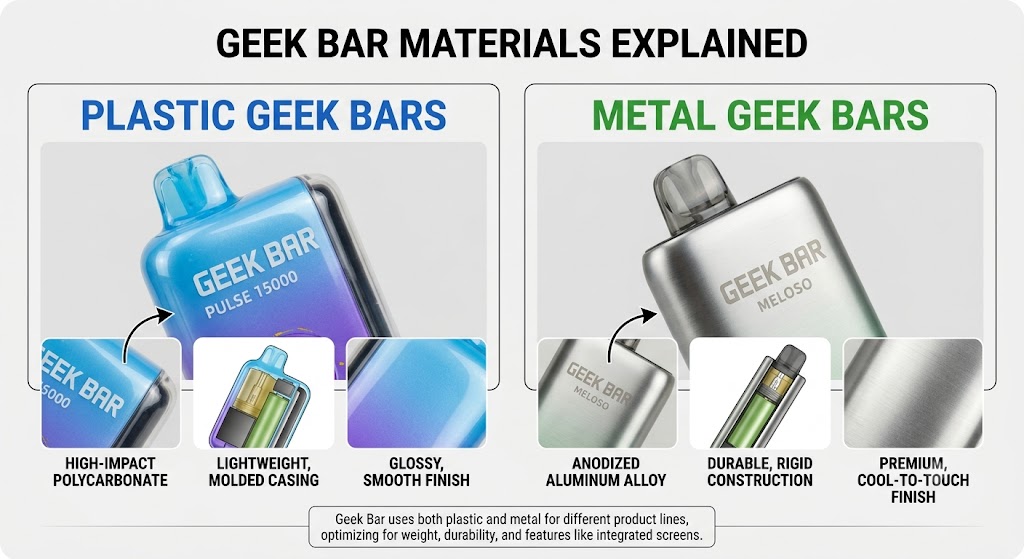
In the rapidly evolving world of vaping, manufacturers balance portability, aesthetic appeal, and cost-effectiveness. Some users prefer the lightweight, ergonomic feel of high-grade polymers, while others appreciate the sturdy, premium weight of metallic finishes. When investigating the composition of these devices, you will often find that they are geek bars plastic or metal depending on the specific model series. Newer releases often utilize a combination of materials to provide both a comfortable grip and structural integrity. As you navigate the vast array of options on the market, understanding these material choices ensures you choose a device that fits your personal preference for handling and durability throughout the day.
Material Comparison at a Glance
Polycarbonate and other high-grade plastics remain the industry standard for most disposable devices for several key reasons. Their primary advantage is weight; a plastic shell makes the device incredibly easy to carry in a pocket or bag without feeling bulky. These materials are also exceptionally versatile, allowing for vibrant, translucent, or soft-touch finishes that are pleasant to handle for extended periods.
From a manufacturing perspective, polymers are ideal for complex, ergonomic shapes that conform naturally to the hand. They provide a tactile warmth, unlike metal, which can feel cold during winter months. Furthermore, high-quality plastics used in modern vapes are designed to be heat-resistant, ensuring the outer shell remains comfortable even during frequent use. By choosing a device with a plastic exterior, you are prioritizing convenience and portability. These models often feature internal reinforcements, ensuring that while the outer casing is light, the structural components protecting the battery and e-liquid reservoir remain secure and protected from accidental drops.
The Appeal of Metallic Finishes
For users who prefer a more sophisticated or durable aesthetic, devices featuring metallic shells offer a distinct sensory experience. The use of aluminum or stainless steel gives the product a “premium” feel, often associated with higher-end electronics. This added density provides a sense of reliability and sturdiness that lightweight alternatives sometimes lack.
Beyond the physical sensation, metal surfaces allow for high-quality finishing techniques such as anodizing, brushing, or powder coating. These treatments not only enhance the visual appeal but also provide a level of scratch resistance that can keep your device looking pristine for longer. While metal is slightly heavier, many users find that the added weight makes the device feel more stable and less likely to be misplaced. It is a common choice for larger-capacity devices where a sturdier frame is required to support a more substantial battery and a larger volume of e-liquid. When you choose a metallic model, you are investing in a design that prioritizes a solid, high-quality construction that stands out in both form and function.
How Internal Components Differ
The external shell is only one part of the story; the internal structure often involves a sophisticated blend of various materials. Regardless of whether the outside is crafted from high-impact plastic or a sleek alloy, the internal chassis must be designed to hold the battery, the coil, and the e-liquid reservoir firmly in place. Most manufacturers use food-grade silicone for seals and gaskets to prevent leaking, ensuring safety and performance.
The heating element, or coil, is almost exclusively made from high-grade metals like stainless steel, Kanthal, or nickel. These metals are chosen for their ability to conduct electricity efficiently and withstand high temperatures without releasing unwanted substances. Plastic framing is frequently used inside the shell to create modular compartments, which helps in isolating the battery from the heat of the coil. This hybrid approach—using metal for critical thermal components and plastic or composite materials for structural support—ensures that the device remains both safe and cost-effective. Understanding this internal architecture reveals why modern designs are so reliable, balancing thermal management with the need for a compact, durable, and user-friendly product.
The Role of Ergonomics in Design
Designers spend significant time perfecting the “hand-feel” of a device, as this is one of the most important factors for daily users. Ergonomics is a marriage of shape, size, and material texture. A device that feels too smooth may slip from the hand, while one that is too rough can cause discomfort. This is why many brands utilize a soft-touch matte finish over a plastic core, or a brushed texture on metal bodies to increase friction.
Beyond texture, the weight distribution within the frame is critical. A perfectly balanced device, regardless of whether it uses plastic or metal, will feel more natural during use. Manufacturers often strategically place the battery—the heaviest component—to ensure the center of gravity rests comfortably in your palm. Some models also include contoured edges to fit the natural curvature of the fingers, reducing fatigue during use. When you select a device, pay attention to these small design details. A well-thought-out exterior not only makes the product more enjoyable to use but also reflects the overall quality of the engineering behind the device, ensuring it fits seamlessly into your lifestyle.
Sustainability and Material Choices
The industry is becoming increasingly conscious of the environmental impact of disposable items. As awareness grows, manufacturers are looking for ways to balance the convenience of disposables with more sustainable material practices. This includes exploring recyclable plastics and metals, as well as designing devices that are easier to disassemble for proper waste management.
When choosing between materials, consider the end-of-life process. Most high-grade plastics are theoretically recyclable, but the presence of integrated batteries often complicates this process. Metallic devices, while often more durable, also require specific recycling paths. Many leading brands are now transitioning toward using materials that are easier to separate, allowing for a better recycling process for both the battery and the outer casing. Being an informed consumer means not just looking at the material feel today, but also understanding how these choices impact the broader goal of responsible consumption. Opting for reputable brands that prioritize transparency regarding their materials is an excellent way to support ongoing improvements in sustainability within the vaping sector.
Balancing Aesthetics and Function
The debate between aesthetic preference and functional durability is central to the vaping experience. Some users prioritize a sleek, metallic look that catches the eye and feels substantial, whereas others prefer a bright, colorful plastic device that is lightweight and fun to carry. Fortunately, there is no “right” answer, as the best choice is the one that aligns with your specific needs and personal style.
Technology has blurred the lines between these categories, as we now see many devices that feature a metallic chassis with plastic accents, or vice versa, to get the best of both worlds. A metallic core can provide the strength and heat dissipation needed for intense use, while a plastic outer layer can offer a comfortable grip and heat insulation for the fingers. As you explore different options, consider how you intend to use the device. If you are constantly on the move, a lightweight, durable plastic model might be your best companion. If you prefer a desktop-style experience or value a high-end feel, a metallic finish might offer more satisfaction. Ultimately, the industry continues to innovate, ensuring that no matter your preference, you can find a device that balances beauty with high-performance utility.
FAQs
Are metal-cased vapes more durable than plastic ones? Generally, metal casings provide better protection against crushing and denting, though they can be more prone to showing scratches compared to some high-quality plastics.
Does the material affect the heat of the device? Yes, metal conducts heat faster, which can make the outer shell feel warmer during prolonged use. Plastic naturally insulates better, keeping the exterior cooler.
Which material is better for an active lifestyle? Many users prefer lightweight plastic for active lifestyles because it is less noticeable in pockets and is less likely to damage other items or cause discomfort during movement.
Are there hybrid devices that use both? Yes, many modern designs incorporate a metallic internal frame for structural integrity combined with a plastic outer shell for comfort, grip, and aesthetic customization.
Conclusion
Navigating the technical aspects of your vaping device provides valuable insight into the quality of your daily experience. Whether you lean toward the lightweight, ergonomic versatility of plastic or the solid, premium feel of metallic finishes, both materials serve their purpose in modern design. The choice often comes down to personal preference regarding weight, grip, and visual style.
By understanding that these devices are crafted with specific engineering goals—balancing durability, thermal management, and comfort—you can make more informed decisions when selecting your next product. It is clear that manufacturers are constantly iterating on these designs, often combining the benefits of both materials to create a product that is both robust and comfortable to hold. Beyond the feel, considering the commitment of brands toward more sustainable material choices adds another layer of responsibility to the selection process. Ultimately, the most important aspect of any device is how well it performs for you and how it integrates into your daily routine. By staying informed about the materials and the design philosophy behind these devices, you ensure that you are always choosing the best possible option for your personal needs, combining style, substance, and high-quality construction.